If you’re trying to find a trusted local roofer, there are a few things I would encourage you to check before signing a contract: proper Arkansas licensing or registration, insurance, manufacturer certifications, local references, and a clear written scope of work.
Just as important, make sure you’re dealing with a contractor who actually has roots in the area. After a major storm, roofing companies can come into Arkansas from all over the country. Some may be perfectly legitimate, but if you have a problem with your roof two or five years from now, it helps to know the company that installed it is still going to be here.
What to Look For When Hiring a Roofer in Central Arkansas
I’ve been in the roofing industry for nearly ten years, and one thing I’ve learned is that homeowners shouldn’t have to become roofing experts just to figure out who they can trust.
Whether you own a home in Garland County or Saline County, (or anywhere else in Central Arkansas!), your roof has to deal with a lot: summer heat, humidity, high winds, hail, heavy rain, and the occasional severe storm.
When those storms come through, homeowners often have a lot of roofing companies competing for their attention. My goal with this article isn’t to tell you that you have to hire us. It’s to give you a few practical things to look for so you can make a good decision, regardless of which roofing contractor you choose.
The Basics I Would Check Before Hiring Any Roofer
Before signing a roofing contract, I would verify a few things:
1. Arkansas Licensing or Registration and Proper Insurance
Ask the contractor for their Arkansas license or roofing registration information and verify that it is current.
Arkansas requires residential roofing contractors performing qualifying roofing work to hold the appropriate license or Residential Roofer Registration, subject to certain licensing exemptions.
You should also verify that the contractor carries general liability insurance. When it comes to workers’ compensation, requirements can vary depending on how the company and its crews are structured, so don’t be afraid to ask how the contractor handles coverage for the people who will actually be working on your property.
A reputable contractor should be willing to answer those questions!
2. A Verifiable Local Presence
Being “local” should mean more than having a local phone number.
Look at how long the company has worked in the area. Check local reviews and references. Find out who owns the company and whether you can actually reach that person if something goes wrong.
An out-of-state license plate by itself doesn’t mean someone is a bad roofer. But when a company appears immediately after a storm, has very little history in the community, pressures you to sign quickly, and can’t give you good local references, I would be cautious.
Your roof may have a warranty that lasts for years. You want a company that plans on being here long enough to stand behind it.
3. Manufacturer Certifications
Manufacturer certifications are another useful thing to look at.
For example, GAF requires certified contractors to meet certain criteria involving licensing and insurance where required, roofing experience, and customer reviews. Certain certification levels also allow contractors to offer enhanced manufacturer-backed warranty options that aren’t available through every installer.
A certification by itself doesn’t automatically make someone a great roofer, but it is another credential worth considering.
4. A Clear Written Estimate
This is a big one for me:
You should understand what you’re buying before the work begins.
A roofing estimate should clearly explain the major components being installed, what work is included and excluded, the warranty being offered, payment terms, and how unexpected items such as rotten decking will be handled.
Be especially careful with estimates that simply say something like “replace roof” without telling you much about the actual roofing system.
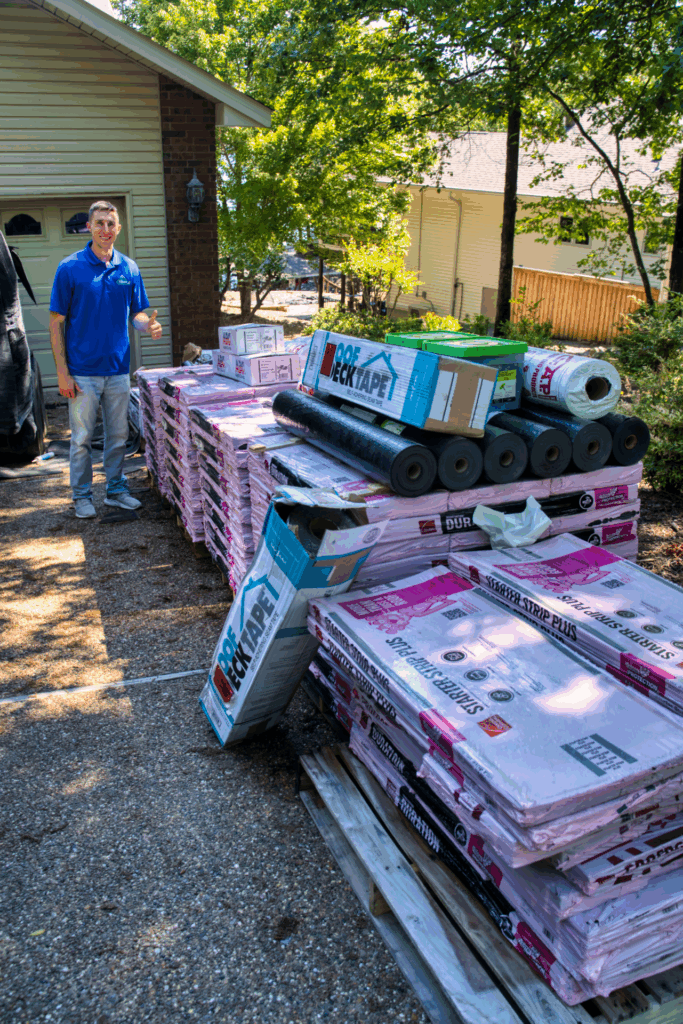
The shingle is only one part of your roof. Underlayment, starter shingles, ridge cap, flashing, ventilation, pipe boots, drip edge, and the condition of the roof deck underneath it all can matter just as much.
Roofing Materials Have Improved Quite a Bit
Roofing systems have changed considerably over the last twenty or thirty years.
A lot of older roofs we tear off were installed with traditional asphalt-saturated felt underlayment and three-tab shingles. Those materials served their purpose, and there are plenty of older roofs that performed well for many years, but homeowners today have access to much better roofing products and system options.
Synthetic Underlayment
One of the biggest changes has been the move from traditional felt toward synthetic roof-deck protection.
Quality synthetic underlayments can offer substantially greater tear resistance than traditional asphalt felt and are generally easier to work with during installation. Different products have different exposure ratings and specifications, so they should always be installed according to the manufacturer’s instructions. Synthetic underlayment is also water-resistant, not a substitute for a finished waterproof roof.
Architectural Shingles
Architectural shingles have also largely replaced the old three-tab shingle on many residential roof replacements.
Modern architectural shingles use a laminated design and fiberglass mat and can provide better appearance and performance than older three-tab products. Wind ratings and warranties vary considerably by manufacturer, product, and installation method, so homeowners should pay attention to the actual shingle being quoted rather than assuming every architectural shingle performs the same.
For example, GAF’s current Timberline products have wind warranty options that depend on the specific shingle and required installation details.
Better Protection in Vulnerable Areas
Another improvement is the ability to build additional protection into the areas of a roof that are most likely to leak.
Self-adhered leak barriers can be used in vulnerable areas such as valleys and around certain roof penetrations. Proper flashing, underlayment, and leak protection all work together as part of the roof system.
This is also where it is important to distinguish between a standard roofing system and a true sealed roof deck, such as one built to FORTIFIED standards. They are not the same thing.
A Few Things I’ve Learned From Being on Roofs
After you’ve looked at enough roofs, you start noticing that many problems don’t begin with the shingle itself.
I’ve seen roofs where the shingles looked like the obvious problem from the ground, only to find deteriorated decking, poor flashing, bad ventilation, or previous repairs underneath once we started taking things apart.
That’s why I don’t believe in simply covering a problem and hoping for the best.
If roof decking is rotten or too deteriorated to properly hold fasteners, it needs to be addressed before new roofing materials go over it. Removing damaged sheathing and replacing it as needed is a normal part of properly repairing wood rot in a roof deck.
This is also why homeowners should ask how a contractor handles unforeseen decking replacement before the job begins. Finding damaged wood during tear-off isn’t necessarily evidence that someone did something wrong. Sometimes you simply cannot see the full condition of the deck until the old roofing materials are removed.
A good contractor should explain that possibility ahead of time and have a clear process for showing you what was found and what it will cost to repair it.
Red Flags to Watch For When Hiring a Roofing Contractor
There are a few things that would make me slow down before hiring someone.
| Warning Sign | Why I Would Be Cautious |
| Demanding Full Payment Up Front | A reasonable deposit or payment schedule is one thing. Requiring 100% payment before materials arrive or work begins should raise questions. |
| No Verifiable Local History | If a company just arrived after a storm and can’t provide local references or a track record in the area, make sure you know who you’re dealing with. |
| High-Pressure Sales Tactics | You should have time to understand an estimate and read a contract before signing it. |
| Vague Estimates | If you can’t tell which products are being installed or what is included in the price, ask for clarification before signing. |
| Promises to “Make Your Deductible Disappear” | Be very cautious. The Arkansas Insurance Department specifically warns homeowners to avoid contractors offering to waive deductibles or provide rebates. Any arrangement involving inflated invoices or misrepresenting what you actually paid can create serious problems with an insurance claim. |
Choose a Roofer You Can Call Again Later
A roof replacement is a major investment, and most homeowners will only replace a roof a few times in their lives.
You don’t need to know everything about roofing before hiring someone. But you should feel comfortable asking questions, and your contractor should be willing to explain what they are recommending and why.
Look for someone who is properly licensed or registered, insured, experienced, transparent about their pricing and scope of work, and established in your area so that you know where to find them if you ever have a problem.
Whether you’re hiring a roofer in Hot Springs, Hot Springs Village, Benton, Malvern, or anywhere else in Central Arkansas, I think the goal should be the same: find someone you trust to do the job correctly, tell you the truth, and stand behind the work after the roof is finished.